The Dilemma of the CDAO
Jessica Chen had been the Chief Data and Analytics Officer at AIVentra Health, (also known as AIV Health) for three months.
AIV Health was a top-10 health insurer serving 8 million members across twelve states. The company had placed a big bet on AI reducing hospital readmissions, which cost them $340 million annually. The models could predict which patients were likely to be readmitted within 30 days and trigger early interventions. When it worked, it saved lives and money.
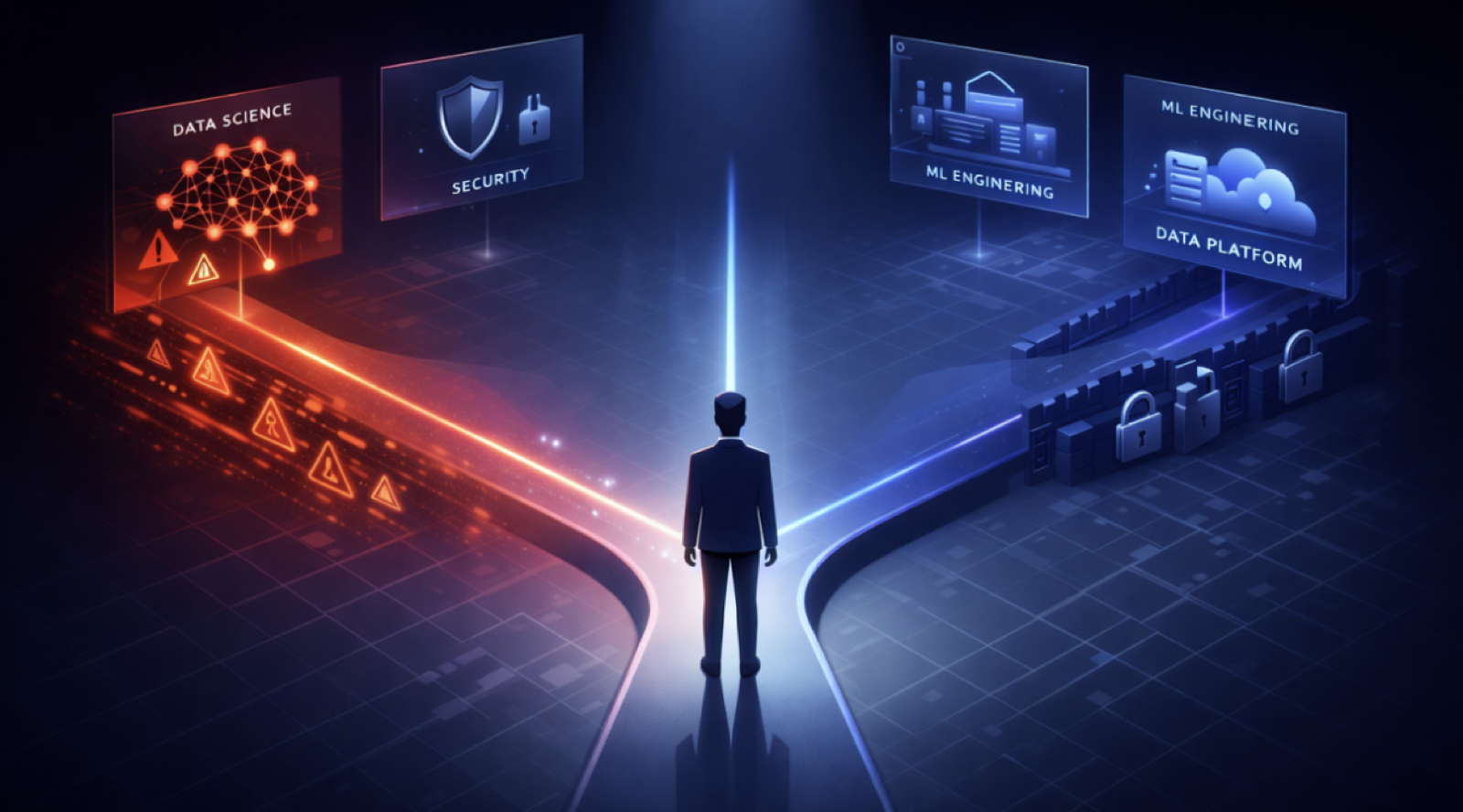
The problem? Their models weren’t working. And their competitors’ models were.
Jessica was staring at two things that didn’t make sense together.
The first was a Gartner report showing competitors had AI readmission models in production, delivering measurable outcomes.
The second was an email from her CEO:
“Jessica, board meeting in 3 weeks. They want to know why our AI initiatives are still in pilot while everyone else is in production. What’s our timeline?”
Jessica knew the answer. Eighteen months, minimum.
She also knew that answer wouldn’t survive the board meeting.
The Competitor Intel Jessica started making calls. Not official calls. Coffee chats with former colleagues who had moved to competitors.
Her old friend Rachel, now at a competing insurer, was the first conversation.
“Your readmission model went live in nine months,” Jessica said. “We’re at sixteen months and still in pilot. What are we missing?”
Rachel got quiet. Then: “How much do you want to know?”
“Everything.”
Rachel lowered her voice. “Our data science team has… let’s call it ‘privileged access’ to certain datasets.”
Jessica understood what that meant. “Production data? In development environments?”
“We have controls,” Rachel said quickly. “VPN access. Audit logs. NDAs. But yeah, they’re working with real patient data. Our CISO isn’t thrilled, but the CEO made it clear we can’t be last to market.”
The second conversation was with Mark, a former colleague now at another health insurer. He was even less comfortable.
“I probably shouldn’t tell you this,” he said. “But we’re using full claims history. Treatment sequences. Medication records. In our cloud data warehouse.”
“For how many patients?”
“All of them. About 6 million records.”
Jessica felt her stomach drop. “Mark, one breach and you’re done.”
“I know.” He looked around the coffee shop. “But everyone’s doing some version of this. How else do you build models that work?”
Jessica left those conversations understanding something she hadn’t wanted to admit.
Her competitors weren’t faster because they were smarter. They were faster because they were gambling with patient data and hoping nothing went wrong.
Hope is not the strategy!
The Emergency Meeting Two days after those coffee meetings, Jessica called her key leaders together. With less than three weeks until the board meeting, she needed answers fast.
David Park, Director of Data Science, arrived looking frustrated. He’d been fighting for data access since she started.
James Mitchell, Director of ML Engineering, came in with his laptop already open to a failed deployment report.
Lisa Anderson, VP of Data Engineering, looked exhausted. Her team was drowning in impossible data requests.
Maria Rodriguez, the CISO, was on her phone finishing another security escalation.
Jessica didn’t waste time. “I’ve been talking to our competitors. We need to talk about how they’re moving faster than us.”
David leaned forward. “Are they using production data?”
“How did you know?”
“Because I’ve been talking to their data scientists too,” David said. “Three different companies. They all have access to real patient data in their development environments.”
Maria looked up from her phone. “That’s completely reckless. One misconfiguration, one insider threat, and they’re facing massive breaches.”
“I know it’s reckless,” David said. “But it explains why their models work and ours don’t. You can’t train a readmission model on fake data and expect it to predict real readmissions.”
James added, “It’s not just training. ML engineering needs production-quality data to validate models before deployment. When we test on synthetic data and deploy to production, the models fail. We’ve had three failed deployments in the past four months.”
Lisa spoke up. “From an infrastructure perspective, I need to be honest about something. My team is getting creative workarounds requested from multiple groups. People are getting desperate.”
Jessica felt the room temperature drop. “What kind of workarounds?”
“Nothing’s been implemented,” Lisa said carefully. “But I’m seeing requests for database copies, export scripts, data extracts that would bypass normal approval processes. People are trying to find ways around the system.”
Maria’s face went hard. “That’s exactly how breaches happen.”
“And if we don’t move forward with AI,” James countered, “we’re going to be so far behind competitors that the business won’t survive long enough to worry about compliance.”
The room went silent.
Jessica looked at the faces around the table. Everyone was right. And everyone was stuck.
The Real Problem “Walk me through what we’ve tried,” Jessica said. “Why can’t we use what we have?”
David pulled up a presentation. “Six months ago, we started with synthetic data. IT generated it based on production schemas and distributions. It looked good on paper.”
“What happened?”
“The readmission model performed terribly. We’re seeing accuracy rates 30 to 45 percent below industry benchmarks. The synthetic data doesn’t capture the edge cases, the comorbidity patterns, the medication interaction effects. All the statistical properties that matter for prediction got smoothed out in the generation process.”
“Analytics is seeing the same thing,” David continued. “The customer segmentation analysis doesn’t match real population characteristics. High-risk patient groups are underrepresented. The dashboards look good but the insights are misleading.”
“What about anonymization?” Jessica asked. “If we properly anonymize the data, we can use it without HIPAA restrictions, right?”
James shook his head. “We tested that in Q3. By the time you remove enough data elements to meet the de-identification safe harbor requirements, you’ve destroyed the predictive relationships. Patient age bands, zip code regions, treatment dates - when you generalize them enough to prevent re-identification, the models can’t find patterns.”
Lisa added, “And the infrastructure challenges are significant. We tried building anonymization pipelines last year. The performance was terrible at scale. We’re talking about processing 50 million claims records, 12 million prescription fills, 8 million member profiles. The transformation logic was fragile and we still couldn’t guarantee re-identification wasn’t possible with external data sources.”
Maria leaned forward, and her voice was different than before. “Look, I’m not trying to block innovation here. I’m trying to prevent us from being on CNN explaining how we exposed 8 million patient records. If we have a breach, we’re facing HIPAA violations that can reach $50,000 per violation, OCR investigations, class action lawsuits, congressional hearings. But more than that - we’d be betraying the trust of real people who gave us their most sensitive health information.”
David’s voice softened. “I know, Maria. I get it. But data scientists need data that behaves like real patient data. The patterns need to be real. The correlations need to be real. The distributions need to be real. Otherwise we’re building models on fiction and they fail when they meet reality.”
Jessica let the silence sit.
“So here’s where we are,” she finally said. “Our competitors are taking enormous risks because they don’t see alternatives. They’re choosing speed over safety and betting they won’t get caught. We’re choosing safety over speed and hoping the market waits for us.”
She looked around the room. “Both of those strategies are based on hope. Neither is acceptable.”
Lisa spoke up again, and this time her voice carried a warning. “There’s something else. Even if we wanted to copy what competitors are doing, we’d need separate infrastructure for every team. Data science environments, ML engineering validation environments, analytics platforms. All containing production data. All needing security controls, access management, audit trails. My team would need to build and maintain four or five copies of production data in different systems. The operational complexity would be massive. And the risk would multiply with every copy we made.”
The Board Reality That evening, Jessica sat at her desk and faced the truth.
In less than three weeks, she’d be in front of the board. They’d ask about AI strategy. They’d ask about competitive positioning. They’d ask why AIV Health was spending millions on AI talent and infrastructure with nothing to show for it.
What could she tell them?
Option A: We’re moving slowly because we’re being responsible with patient data.
The board would ask why competitors weren’t facing the same slowdowns. They’d question whether “responsible” was code for “unable to execute.”
Option B: We’re going to copy what competitors are doing and accept the risk.
Maria would resign. And she’d be right to. Jessica wasn’t going to bet patient privacy on hope.
She thought about David’s team, talented data scientists who were building models that didn’t work. About James’s failed deployments. About Lisa’s team drowning in impossible requests while fielding workaround requests that could lead to breaches.
She thought about the 8 million members whose health outcomes depended on AIV Health getting AI right.
And she thought about Rachel and Mark, her former colleagues who had admitted they were gambling with patient data because they couldn’t figure out a better way.
Why does it have to be one or the other?
The Realization Jessica pulled out her notebook and started writing.
What does David actually need? Data with real patterns, real correlations, real distributions.
What does James actually need? Data that behaves like production for model validation.
What does Lisa actually need? A scalable approach that doesn’t require maintaining multiple copies of production data.
What does Maria actually need? Patient privacy protected from breach risk. And the ability to look patients in the eye knowing their trust wasn’t betrayed.
What do the analytics teams need? Data that reflects actual population characteristics so executives aren’t making decisions based on fantasy numbers.
What does compliance need? Meeting HIPAA requirements and surviving audits.
Jessica stared at the list. Every requirement was legitimate. None of them were wrong.
But everyone had assumed these requirements were in conflict. That you had to choose between useful data and protected data.
What if they weren’t in conflict? What if the data didn’t need to be production data to have production characteristics?
Jessica wrote one question at the bottom of the page:
“What if we could transform the data in a way that keeps what data scientists need while removing what compliance officers fear?”
She didn’t have the answer yet. But for the first time since taking this role, she felt like she was asking the right question.
Tomorrow, she’d start talking to each leader individually. Not to convince them to compromise. But to understand exactly what success looked like from their perspective.
Because solving this wasn’t about getting everyone to meet in the middle.
It was about finding the approach where everyone could say yes.